Japan 14-Day Itinerary: The Essential Framework for Planning Beyond the Tourist Trail
 Viarlo Travel Studio8 May 202614 min read
Japan is one of the most rewarding destinations in the world to plan well, and one of the most overwhelming to plan badly. The research rabbit hole is deep: seventeen tabs on ryokans, three competing opinions on the JR Pass, endless Reddit threads that contradict each other, and a growing sense that everyone has visited a completely different country. At Viarlo Travel Studio, we work with clients on Japan itineraries regularly, and the question we hear most often isn't "where should I go?", it's "how do I decide what kind of Japan trip this actually is?"
That's the right question. And it's the one this framework is built around.
What follows isn't a day-by-day prescriptive itinerary. It's a planning structure: a way of thinking about fourteen days in Japan that helps you build something genuinely personal, rather than following a template that wasn't designed for you.
Why Most Japan Itineraries Look the Same
The standard Japan 14-day itinerary goes something like this: fly into Tokyo, spend four nights, take the Shinkansen to Kyoto, spend three nights, day-trip to Nara, maybe Osaka, then loop back to Tokyo for departure. It's not wrong - these are extraordinary places. But it's also a route that thousands of people follow in exactly the same order, at exactly the same pace, ticking exactly the same sites.
The issue isn't the destinations. It's the assumption that the same structure works for everyone.
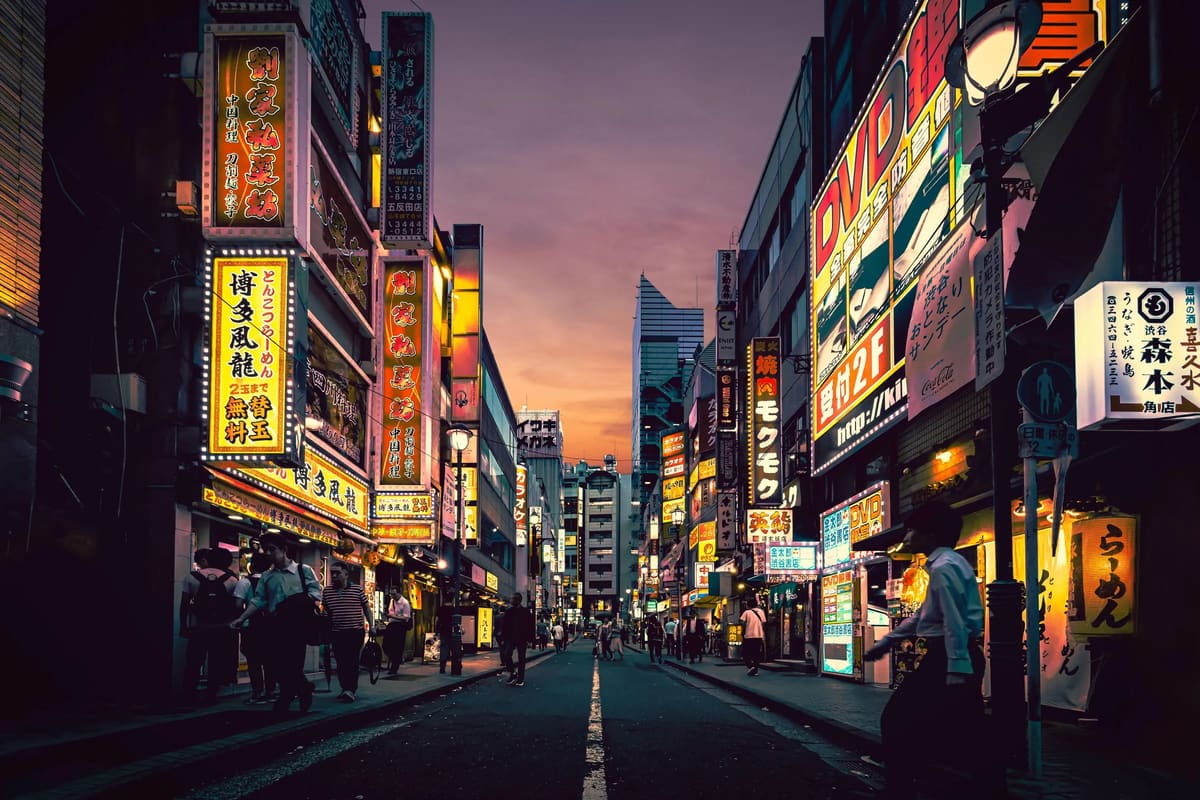
A couple on their honeymoon wants something different from a solo traveller exploring Japan for the third time. A food-focused trip through Osaka and Fukuoka has a completely different rhythm from a temple and nature circuit through Kyoto, Nara and the Kii Peninsula. The traveller who finds crowds draining needs a different pace than the one energised by the chaos of Shinjuku at night.
Fourteen days in Japan is a generous window. Long enough to go deep into two or three regions. Long enough to include a mix of pace and not just relentless sightseeing.
The first decision isn't "which cities?", it's "what kind of Japan trip is this?"
The Three Japan Trip Archetypes
Before plotting a single city on your map, it helps to identify which archetype your trip belongs to. Most Japan 14-day trips fall into one of these structures - or a hybrid of two.
The Classic Arc runs Tokyo → Kyoto → Osaka with possible extensions north to Nikko or Hakone, or south to Hiroshima and Miyajima. This is the Shinkansen spine. It suits first-time visitors who want to understand Japan's contrasts - the hyper-modern and the deeply traditional - without logistics complexity. The risk is over-programming. First-time visitors consistently underestimate how much there is to do in Tokyo alone.
The Deep Cut sacrifices geographic breadth for cultural depth. It might mean spending the majority of the trip in the Kansai region - Kyoto, Nara, Osaka, Kobe - and genuinely understanding each place rather than moving on after two nights. Or it might mean grounding in Tokyo and going north into Tohoku, a region that still has relatively few international visitors despite extraordinary food, festivals and landscape. Deep cuts suit experienced travellers who have done the highlights or who prioritise depth over coverage.
The Contrast Loop deliberately places opposites next to each other: urban density followed by mountain silence, traditional craft culture followed by futuristic retail. Osaka to Yakushima. Tokyo to Kanazawa. Kyoto to Hiroshima. The contrast loop creates the strongest sense of having experienced Japan rather than moved through it, but it requires more careful logistics and usually benefits from a longer transfer budget.
Knowing which archetype fits your travel style, pace and priorities is the first structural decision. Everything else, like which cities, how long, what to include, follows from that.
How to Build Your Japan 14-Day Itinerary
Week One: Arrival, Orientation, Your Anchor City
The first week of any Japan trip does two things: absorbs the jet lag and establishes a home base.
Tokyo suits most travellers as an arrival city. It's large enough that you can spend four or five nights without running out of things to do, and it gives you time to adjust before the pace of travel begins. The common mistake is treating Tokyo as a checklist - Senso-ji, Shibuya crossing, Harajuku, done. Tokyo is better understood as a collection of distinct neighbourhoods, each with its own atmosphere and pace. Yanaka feels like a preserved Edo-era city. Shimokitazawa is vinyl records, vintage clothing and live music. Koenji runs on a quieter creative energy than the main tourist circuit.
If you're entering Japan via Osaka (often a better flight connection from Europe), the week-one structure reverses: Osaka as your first anchor, then Kyoto, then the Shinkansen north.
Day and pace structure for week one:
- 1-2 days: pure acclimatisation with slow mornings, local walks, minimal ambition
- 2-3 days: structured exploration of your anchor city
- 1 day: one day trip (Nikko from Tokyo; Nara from Osaka)
The temptation to pack more into week one consistently produces travellers who arrive at their week-two destinations exhausted. Japan rewards slowness. A long coffee in a basement kissaten in Shinjuku is a richer experience than rushing between five shrines.
Week Two: The Turn, Depth and Departure
The second week is where a Japan itinerary either becomes genuinely memorable or becomes a blur of trains and temples.
The turn - the shift from your first anchor city to your second major region - is the structural heart of the trip. For most travellers, this means the Shinkansen journey from Tokyo to Kyoto, or the journey into the Japanese Alps, or south to Hiroshima and beyond. The turn works best when it's treated as a deliberate shift in pace and tone, not just a logistics move.
Kyoto and the Kansai region have more cultural depth than most travellers can absorb in three nights. Kyoto alone - its temples, its kaiseki cuisine, its craft traditions, its quiet northern and eastern districts - can absorb four or five days without repetition. The standard advice is to do Kyoto in two nights because that's how most itineraries are structured. This is one of the most consistent things travellers report regretting.
Three considerations for week two:
- Don't skip the overnight. One night in a traditional ryokan, with kaiseki dinner, morning breakfast, and a bath ritual that recalibrates everything, belongs in any Japan trip of substance. It doesn't have to be expensive. It has to be chosen carefully.
- One slow day. A day without a plan - a farmers' market, a temple discovered by accident, lunch that lasts two hours - often produces the clearest memories. Build one in.
- Departure logistics matter. Flying out of Osaka (Kansai) rather than Tokyo saves backtracking time and is often cheaper. If your itinerary naturally ends in the Kansai region, this is worth exploring at the planning stage.
What a Personalised Japan Itinerary Actually Considers
This is where generic advice ends and genuine planning begins.
A template itinerary answers "which cities?" A personalised Japan itinerary answers:
Pace. How many hours a day do you want to be actively exploring? How much time do you need to decompress? Do you travel well on the move or do you need longer in each place to feel settled?
Sleep style. Western hotel, boutique hotel, or ryokan - or a mix? This affects logistics, budget and experience significantly.
Food priorities. Japan is one of the world's great food destinations, but the specific experience varies wildly: ramen in Sapporo is not the same as kaiseki in Kyoto, which is not the same as standing sushi bars in Tsukiji or izakaya-hopping in Fukuoka. A food-led trip has a different shape than a temple-led trip.
Crowd tolerance. Fushimi Inari at 7am is a different experience from Fushimi Inari at 11am. The gap between a crowd-sensitive traveller's experience and an indifferent one is significant, and it's entirely plannable.
Photography, nature, craft. Japan has exceptional photography locations (mostly off the obvious circuit), extraordinary natural landscapes (Yakushima, the Japanese Alps, Hokkaido) and deep craft traditions (Kanazawa for lacquerware and gold leaf, Kyoto for textiles, Mashiko for ceramics). A trip structured around any one of these has a completely different shape.
The Blueprint Difference: Structure, Not Just a List
There's a meaningful difference between a list of recommendations and a travel blueprint.
A list tells you where to go. A blueprint tells you how to move through those places, what order makes sense, how long each deserves, where to slow down, where the transitions are and how the pieces fit together into something that has a shape and a rhythm.
What is a travel blueprint?
A travel blueprint is a complete, personalised journey design - not a template or a generic guide, but a document built specifically around your preferences, pace and travel style. At Viarlo Travel Studio, a Japan travel blueprint includes the journey structure and daily flow, accommodation guidance suited to your style and budget, curated restaurant and experience recommendations for each location, practical logistics (transport, routing), and the reasoning behind each decision, so you can adapt with confidence if plans change.
A blueprint is not a booking service. It's a design document: an expert-crafted plan that you carry with you, that removes the decision fatigue and gives you the confidence of arriving knowing your trip has been properly considered.
You can explore how a Viarlo travel blueprint is structured, and what one includes, on our travel blueprints page.
The Japan Planning Decisions That Actually Matter
After working with multiple Japan travellers, these are the decisions that consistently determine the difference between a good trip and a genuinely great one.
The JR Pass question. The JR Pass is valuable for some itineraries and unnecessary for others. It entirely depends on your routing. Travellers who stay primarily in Kansai often don't need it. Travellers doing Tokyo → Kyoto → Hiroshima → Tokyo almost always do. Calculate your actual routes before purchasing.
When to go. Japan has distinct seasonal experiences that should inform timing. Cherry blossom (late March to mid-April) is extraordinary but comes with significant crowds and inflated accommodation prices. Autumn foliage (mid-November) offers similarly dramatic colour with slightly fewer visitors. Summer is hot and humid - not unpleasant but different. November and early December, outside of foliage peak, offer some of the most comfortable conditions for walking-heavy itineraries.
Accommodation mix. A Japan trip that includes only Western hotels misses one of the country's most distinctive experiences. A trip that includes only ryokans requires a comfort level with shared bath culture and formal dining structures that not everyone has. A thoughtful mix - two ryokan nights placed deliberately in the itinerary rather than by default - serves most travellers well.
The pace trap. Fourteen days in Japan can accommodate perhaps six to eight distinct "locations" at a sustainable pace. Travellers who try to see twelve, do see more, but they see less of each, and they arrive home more exhausted than rested. Japan rewards depth over breadth, consistently.
The Japan Framework PDF
If you're in the early stages of planning a Japan trip, the Viarlo Japan Framework PDF offers a practical starting structure: a planning worksheet, timing guidance, region overviews and the key decisions to make before you start booking. It's a useful foundation before building a full itinerary.
Download the Japan Framework PDF →
Designing Your Japan Trip Around You
Japan is not one trip. It's a hundred possible trips, each shaped by who is taking it, what they value, and how they travel.
The framework above is a starting point: a structure for thinking about fourteen days in a way that produces something genuinely personal rather than a borrowed template. But the most important step is matching that structure to you specifically - your pace, your interests, your priorities, the things you're genuinely excited about and the things you know drain you.
That's what a personalised travel blueprint does. It takes the destination expertise and applies it to a specific traveller, so the result is a plan that could only be yours. To see what a fourteen-day Japan blueprint costs, shape your trip opens with those details already filled in.
Want this journey designed around you? Start with a free 15-minute intro call - no commitment, just a conversation about your Japan trip. Book My Free Intro Call →
Japan Planning: Your Questions Answered
How many cities should I include in a Japan 14-day itinerary?
Most 14-day Japan itineraries work best with three to four distinct locations, including at least one multi-night stay of four or more nights. Trying to cover more than five or six cities in two weeks tends to produce a trip that feels rushed and exhausting rather than immersive. Japan rewards depth over coverage - spending five nights in Kyoto and genuinely understanding the city yields a richer experience than spending two nights in eight cities.
Is it worth using a travel planner for Japan, or can I plan it myself?
You can plan a Japan trip yourself - many people do. The question is whether the investment of 30 to 50 hours of research produces the kind of personalised, well-structured itinerary you're looking for. Japan is one of the most complex destinations to plan well: the routing decisions, accommodation choices, timing considerations and experience curation all interact with each other in ways that aren't obvious from blog posts alone. Services like Viarlo Travel Studio design personalised Japan itineraries at a fixed price (from €249 for the Essentials Blueprint), which means the planning expertise is more accessible than most travellers assume.
What is a Japan travel blueprint and how is it different from a standard itinerary?
A Japan travel blueprint is a complete, personalised journey design document, built from scratch around a specific traveller's preferences, pace and travel style. Unlike a standard itinerary (which tells you where to go), a blueprint tells you how to move through Japan: the structure, daily rhythm, accommodation guidance, curated experiences, logistics and the reasoning behind each decision. Viarlo Travel Studio delivers Japan travel blueprints as premium PDF documents within 7 to 10 working days of the planning consultation.
When is the best time to visit Japan for a 14-day trip?
The most popular windows are cherry blossom season (late March to mid-April) and autumn foliage (mid-November) - both visually dramatic but busier and more expensive than other times. For a walking-intensive itinerary, late October to early November offers excellent conditions: mild temperatures, autumn colour beginning, and fewer visitors than peak season. Spring outside of cherry blossom peak (early May, after Golden Week) is also excellent. Summer (July to August) is hot, humid and crowded; January and February are cold but offer quieter conditions and some travellers' favourite cultural experiences.
Do I need a JR Pass for a 14-day Japan trip?
It depends entirely on your routing. The JR Pass covers the Shinkansen network and most JR trains, but it's only cost-effective for itineraries that include multiple long-distance journeys. Travellers doing Tokyo → Kyoto → Hiroshima → back to Tokyo almost always benefit from a JR Pass. Travellers spending most of their time within the Kansai region (Kyoto, Osaka, Nara) often find it unnecessary. Calculate the individual ticket costs for your specific route before purchasing - the pass is a significant upfront spend and isn't refundable.
A creative travel studio designing fully personalised journeys, built around the way you actually like to travel.